

Hi! My name is Nancy and I am an art journaling supplies addict.
My addiction started back in 2020 when I began my blog and also began bullet journaling.
I had no idea which journal to use, how to use a single art supply in my journal, nor did I know which ones to purchase.
Needless to say, I quickly got lost in a sea of art journaling supplies, and can truly tell you I wished I had some direction; it would have saved a lot of time and money.

To help you out, this article provides you with a very huge list of supplies. Please do not let it overwhelm you!
This is a comprehensive list of all the pens, pencils, markers, paints, brushes, paper, journals, and all the other extras since the day I began my personal art journaling practice.
It has taken me 4 years to collect, use, try, like, dislike, settle, and upgrade so use this list only as a guide for you.
Disclaimer: I do NOT want you to go running out and purchasing everything in this guide.
Some of these things are expensive and in no way shape or form are ANY of them REQUIRED for you to begin art journaling today.
If all you have is a sheet of copy paper, a pencil, and a crayon, you can use those things. USE WHAT YOU HAVE and add as you grow.
I also want you to know that what you use to express yourself in your journal is personal to you.
We feel drawn to what we are drawn to, and part of trusting yourself is learning to listen to that voice inside you saying “I want to use this today” and “I want to try this.”
For my first art journaling year (four years ago), I adorned my journal pages using stencils, pens, pencils, and good old-fashioned Crayola Super Tip Markers.
I still have the same set of markers, except about 3 markers which finally have dried up.
Now, let’s get to the reason you came here in the first place.
What is Art Journaling?
Before we jump right into this hefty guide of art supplies, it is important to understand what art journaling is.
Rachel Greig, a mixed media artist from Australia, who sadly passed away in 2023, describes art journaling as “… a visual diary where you can creatively express your ideas, thoughts, feelings, memories and emotions through any type of art form you enjoy.”
Rakefet Hadar, art therapist and author of Layers of Meaning, describes visual journaling as “a tool that helps us learn the language of meaning in our lives.”
Art journaling is an individual, personal, intimate, and private process and, therefore, there is no “right way” to practice this art of expression.
You don’t need any artistic skills or abilities to keep an art journal.
All you need is a desire to find a deeper meaning in your life, learn more about yourself, and create a safe space to fully express and be vulnerable with yourself.
Each page in your journal will have its own meaning because it is you who creates it. It is you who understands your own process, the questions you answer for your life, and the stories you are telling.
Exodus 35:35 (NIV) says, “He has filled them with skill to do all kinds of work as engravers, designers, embroiderers in blue, purple and scarlet yarn and fine linen, and weavers—all of them skilled workers and designers.”
Regardless of the artistic abilities you have, God has created you to be a skilled designer.
Your art is always exactly as it should be! Allow yourself to create and tell your stories freely.
But, to do our visual storytelling, we do need some tools to do that.
Let’s begin this tour of amazing art supplies.
Why Art Journaling is a Great Creative Outlet for Beginners
Like all journaling, art journaling has no rules, which is why it is such a great creative outlet for beginners and experts!
Unlike structured or guided journaling, art journaling starts with an intention. Then, you can dive right in and get messy.
I want to share a reframe with you that will help you break perfectionism out of your journal. One of artist Bob Ross’s famous quotes is, “There are no mistakes. There are only happy accidents.”
Our art journals are full of happy little accidents because we learn so many things along the way.
This beginner’s guide to art journaling is an incredibly safe space to explore, experiment, play, have fun, and have the freedom to do whatever you want and how you want with your journal.
Beginner’s Guide of Essential Supplies for Art Journaling
In this section, we’ll get into the core tools and materials you need to kickstart your art journaling journey with confidence, as well as fun accessories you can add to your collection down the line.
Whether you’re an aspiring artist or simply looking to unleash your creativity, having the right supplies at your fingertips is key to bringing your artistic visions to life.
We’ll break down the essentials, offering insights into pens, pencils, markers, paints, brushes, paper, and more, ensuring you have a solid foundation to embark on your art journaling adventure.
Choosing the Right Journal for Your Art Journaling Journey
Any surface you create on is called a substrate. In the world of art journaling, this is generally going to be some kind of paper, sketchbook, notebook, or journal.
One of the absolute number one questions I get about journaling is, “What journal should I use?”
The answer is that you can use just about anything!
You can purchase a variety of journals, pick up an old book at the thrift store, or choose to make your own.
I have not mastered making a handmade journal yet. So, for now, I stick to using the ones I can (and have) purchase.
Here are some various substrates you can choose from when starting your art journal.
Composition Books and Notebooks
I learned about using regular old composition notebooks from mixed media artist Shawn Petite in one of the classes she taught.
You can use ANY kind of notebook, but if you are going to use this kind of notebook for your art journal, it is important to treat the pages with gesso first (any kind EXCEPT glossy).
Because a lot of art journaling is mixed media (the combination of a variety of different mediums, such as acrylics and inks), your pages are going to get very wet at times.
The gesso acts as a barrier between the pages and liquids (such as water or wet paint) and helps the pages hold up.
[Skip to the bottom of this article to learn more about gesso. It is under “Additional Resources”.]
Recycled Books for Art Journaling (Altered Books)
If you have old books lying around, you can use the entire book as a substrate for your art journal.
You can also head to your local thrift store and find a new-to-you book for $0.25 – $1.
Typically this is referred to as Altered Book Art Journaling.
Using hardcover books are wonderful because the cover protects what is inside, and you can personalize the covers.
But don’t feel like your book needs to have a hard back. You can use any kind of old book you have lying around collecting dust.
To create your altered art journaling book, treat the pages ahead of time with gesso and allow them to dry. Then, they are ready for your creative journey!
If this is something you are interested in, there are entire art journaling communities dedicated to using altered books.
You can find these with a quick Google or Facebook search.
Watercolor Paper and Journals

Watercolor journals like this one are notebooks filled with sheets of watercolor paper (my Dylusions journal is right behind it).
Do not let the name fool you, though.
Watercolor paper is phenomenal for any kind of art journaling, not just for painting with watercolors.
Since watercolor paper is thick and absorbent, if you plan on using any kind of mixed media (combining several types of mediums such as acrylic, pastels, ink, etc), a watercolor journal is an awesome choice.
You can also make handmade journals with watercolor paper!
Again, I have not yet mastered this, but if you are ready to take on this task, this can be a great, creative way to start your art journaling journey.
Helpful tip: select various watercolor paper that is at least 140 lb/300 gsm weight. It does not matter if it is hot or cold press. (However, I do think 100% cotton cold press paper is the most absorbent, and it is the very best.)
Remember that it is NOT necessary to spend a ton of money here. Get the best that you can afford.
Bullet Journals and Dot Grid Notebooks
I used to have my own line of dot grid notebooks and have used them many times for art journaling. But, these are not my personal preference.
If you have some lying around being unused, by all means, USE them!
But this is another type of journal you will want to cover the pages with gesso and allow to dry completely before applying anything wet on the pages. The paper just is not strong enough to hold up to all of the layers and wet mediums on their own.
There is no reason to not use a dot grid notebook if you have one.
Just know that as a beginner, it can become stressful worrying about the beautiful covers getting beat up because trust me … they will.
Some of the 160 gsm dot grid notebooks are also expensive and are only purchased because of the beautiful covers.
If it will not break your heart for your bullet journals to get beat up or even fall apart, I say GO FOR IT!
If this is a concern of yours, do yourself a favor and just avoid it.
If you want to learn more about dot grid notebooks, here is my Review of the Best Bullet Journals for Beginners. If nothing else, you will definitely see a difference in how I journaled then to how I do now. Boy a lot has changed since 2021!
Mixed Media Notebooks
I use these a LOT.
Mixed media paper is designed for exactly what it says: mixed media, which is defined by the Cambridge Dictionary as “a way of making art that uses different substances mixed together.”
This is one of the primary reasons your art journaling supplies list can keep growing!
Mixed media combines anything from acrylic paint, colored pencils, and inks, to collage glues, markers, paint pens, watercolors, oil or soft pastels, colored pencils, graphite, charcoal…the list goes on and on.
Different types of papers are made for different mediums because of how they interact with the specific art medium. Mixed media paper can take pretty much all mediums fairly well!
Mixed media notebooks typically come hardbound with a spiral seam and a variety of different sizes. I personally like the spiral ones with perforated pages.
They are fairly inexpensive as well, so these are great options if you are on a budget.
Sketchbooks
Because many sketchbooks don’t have heavy pages, you will most likely need to gesso and dry each page before using it for your art journaling.
Regardless, you can pick up a sketchbook pretty much anywhere, so this is a great choice if it’s all you can get your hands on!
Sketchbooks are also great for drawing practice or doodling.
Over the years, I have fiddled around quite a bit with drawing, and using a sketchbook helps with practicing.
They also come in sizes that you can throw in your purse or bag and carry with you wherever you go.
When you feel inspired by something around you or an experience, pulling it out to sketch can then become the inspiration for your art journal pages.
You may consider grabbing this sketchbook for on-the-go inspiration.
Do not worry if you think you cannot draw. Everyone can draw stick figures or trees, and there is nothing wrong with doodling down your ideas.
Some of the greatest art journals are those filled with impromptu thoughts and ideas.
Bible Illustration Journals
I need to include Bible illustration journals in this guide because it is one easily forgotten.
If you are journaling for your faith, there are dedicated journals specifically made for Bible journaling!
In addition, tons of Bible journaling groups on Facebook are pretty inspirational if you ask me.
Journals Specifically Used for Art Journaling
The Dylusions journal is the only one I am currently aware of that is specifically designed for art journaling. Its creator, Diana Wakely teamed up with Tim Holz, a leading brand for art journals and mixed media enthusiasts.
The cover is a plain kraft paper-type chipboard and the pages and thick and heavy card stock. They are durable and intended for holding up to the wear and tear an art journal goes through.
They come in a variety of sizes and are EXCEPTIONAL quality.
I have 2 of these journals and use the A5 size as well as the 8×8 size.
If you can treat yourself, you will not be disappointed by how phenomenal these journals are.
Exploring Different Art Tools for Art Journaling
Now that you hopefully know what your art journaling journal will be, let’s look at the beginner’s guide for art journaling supplies a bit deeper.
Art Journaling Pens
What are the best pens for journaling?
I asked myself this question a million times, which led me down a rabbit hole of finding the pens I enjoyed using.
In 2021 the search for the perfect pens began and I wrote Best Pens for Journaling in 2021.
Since that time, have added to my repertoire of pens and have no doubts about what my go-tos are. However, the information in that article has some pretty helpful information especially if you are a beginner. I mean …. I WAS a beginner after all.
I have tested out so many different pens and now consistently rely upon the same types, all for various reasons.
When it comes to any art supply, including pens, it is best to go with what YOU love.
There are so many brands and choices, and everyone’s preferences differ. But, it is also important to consider what you want them to do.
If you are using them for details and do not want them to smudge or fade, you are going to want pens that are archival, acid-free, waterproof, lightfast, and permanent.
Acid-free, lightfast, archival quality means that they will not fade over time. Waterproof and permanent means that once the ink dries, ink will not be reactivated when wet.
Archival and lightfast quality anything is generally a bit higher in price so, again, use what you have, what you can afford, and do not feel you have to have the best of the best.
If you want to play around and create some different effects, especially a grunge effect, then water-based pens are fine.
The best thing you can do is experiment and learn what your pens can and cannot do. Experimentation is all part of the process and any mishaps you may have can almost ALWAYS be turned into something else.
After over four years of research, here are my top recommendations for art journaling pens.
Ballpoint pens
Ballpoint pens are great for writing out your thoughts before you begin building the layers in your art journal pages.
They are also great for adding doodles and marks over dry acrylic paint or light outlining over watercolors.
Microns and Fineliners
If there is one type of pen that is a must-have, this would be it. Microns and fineliners are essential tools in any kind of journaling across the board because they are multipurpose.
These are pens that can be used for outlines, mark making, fixing mistakes, writing, drawing, making things darker, adding details, and more.
They come in a variety of colors and nib (tip) sizes as well.
I use these pens daily and would be so sad if I didn’t have them for doodling.
If you had only ten dollars to spend on pens for a year, and had no idea which ones to buy because there are way too many choices, Microns and Fineliners would be the ones to spend your money on.
Gel Pens
The world of gel pens can be daunting. I don’t use colored gel pens much anymore since I stopped bullet journaling.
However, some super cool glaze pens are fun to use for colorful finishing touches on your journal pages.
Many gel writing pens are smoother and darker than ballpoint pens, so if you prefer writing with gel pens over ballpoint pens like I do, grab some of these in medium lines for slightly bolder effects and these fine lines for more whimsical, soft writing.
White Pens
White pens are phenomenal for making dots, adding highlights, writing on dark paint, hand lettering highlights, reflections of the sun and light, eye pupils, hair highlights, doodles, flowers, covering mistakes, and just about anything your heart desires.
These are another definite must in my collection of art journaling pens. White acrylic paint pens are brighter, whiter, and are lightfast so I recommend these. (See the section ACRYLIC PAINT PENS).
Gelly Roll or the Faber Castell White Pitt Artist Pen both can work well and get a lot of use and, therefore, one art journaling supply I know you will not be disappointed with as a beginner.
Fountain Pens
Fountain pens are something brand new for me that I have only used recently and have only used them on watercolor paper.
However, I do know a lot of people who use them and absolutely swear by them, so I wanted to include them in this beginner’s guide to art journaling supplies.
I have seen art journalers use fountain pens for mark making, faux calligraphy, hand lettering, and just everyday journal writing.
I did a lesson with Artist Toni Burt and she uses fountain pens to do loose drawings.
She then uses a watercolor brush which activates the ink and creates some very expressive and emotive artwork.
These are worth giving a try. You can then turn the images into collage for your art journal or use as a standalone page. They really are pretty cool.
Calligraphy Pens
I have used both traditional calligraphy pens as well as calligraphy markers.
In my experience, calligraphy pens for art journaling are best suited for things like mark making, and depending upon the type of ink used, they may or may not be waterproof.
(You definitely want to check this out before buying pens.)
Calligraphy markers such as the Elegant Writer, however, can be laid down and wet with a paintbrush.
The laid-down ink will reactivate and can be used like paint for some really awesome effects.
(Again, there is no way to art journal wrong! Play around with it and get messy.)
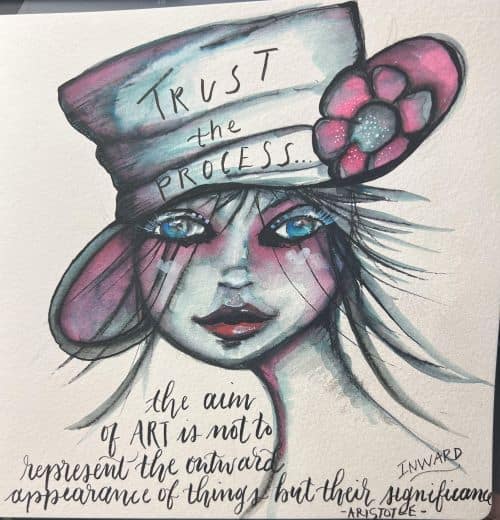
Glass Pen
Glass pens are long pieces of beautifully designed glass with pointed tips that are specially designed to hold ink that will flow off of the pen and onto the paper.
They do not work well on wet surfaces because the ink bleeds (also known as “feathering”), and I do not recommend you use them for hand-lettering unless your page is inherently dry.
If you want to experiment with them for other things, by all means do! Using ink on wet surfaces can create some very magical effects that you can later use as a background for mixed media pages.
When it came to using metallic ink on glass pens in my own art journaling, I did not have any luck.
The ink seemed to get clogged in between the grooves of the glass tip and just didn’t work for me.
I much prefer using a fluid writer when using metallic inks like these.
Fluid Writer
Fluid writers do not look like pens.
They are very funky and scary-looking, but they are awesome for writing or drawing with metallic inks.
A fluid writer is made of metal and has a tiny, sharp tip with an ink reservoir attached to it. The reservoir is filled with drops of ink that flow through the sharp tip.
Fluid writers are perfect for anything you may want to outline or add details to your page.
They are very simple to use, and in my opinion, are the most effective way to add shiny gold accents to any piece of art you create.
I prefer the Large Fluid Writer by Kemper tools because holding it doesn’t feel wonky and weird to me.
The head of it is designed more at an angle whereas other ones I have purchased are at a 90 degree angle requiring you to hold it straight up and down to write.
It is a matter of preference but I am not about the wonky and weird uncomfy life when it comes to using art supplies.
These are my favorite fluid writers, and here is my favorite metallic ink.
Art Journaling Pencils
There are so many different types of pencils and they have so many different uses besides drawing.
They are useful for mark-making, adding outlines, adding colors, shading, brightening up paint, making colors smoother, correcting color mistakes, making hair, adding grunge effects, and adding frames to pages.
Here’s a list of my top recommended pencils for art journaling.
Graphite Pencils

Despite what many of us were taught, pencils are not made with lead.
They are made with graphite which is a carbon material processed and formed into sticks to give us pencils.
B is the softest of graphite, HB is in between, and H is the hardest.
B graphite ranges from 2B up to 16B.
The higher the number, the softer the lead, and the darker the marks. The darker the marks, the harder it is to erase, and the more it will smudge. Smudging is not a bad thing … we need smudging for shading.
Shading helps give life to whatever it is we are creating whether it be a doodle or a face.
I generally use between 2B-8B pencils when I draw.
HB pencils are fairly standard whether it be mechanical pencils or your everyday school pencils.
There is no actual standard when it comes to our trusty yellow school pencils, but it is the most popular.
If you are on a serious budget, rest assured you can do a lot with everyday school pencils, and they will do just fine for most things.
I get really lazy sometimes and don’t want to drag out all of my pencils, and I use a standard yellow #2 pencil and will create entire drawings with just that pencil…shading and all. It can be done!
Overall, I think it is worthwhile having a good set of graphite pencils if you plan on venturing into drawing. I also think it is worthwhile getting a set of good mechanical pencils.
I have used the Pentel Graphgear 1000 for several years.
It was a small investment considering I use it every single day. I have purchased only one set of replacement leads, as it is a high-quality multipurpose pencil.
The other pencil I have recently started using is the Uni Kura Toga. I am very heavy-handed when drawing, and this is a much lighter-weight pencil that draws like butter.
My most recent discovery was while taking courses in Karen Campbell’s Fun Fab Drawing Club. She introduced us to the magical and wondrous Blackwing Pencil. Add them to your birthday, Valentine’s or Christmas list .. they are beyond wonderful.
Colored Pencils
Colored pencils are so beautiful, and they also can be so very expensive. (But, they don’t have to be!)
Earlier in my post I had mentioned you should consider buying the highest quality materials you can afford. This is one of those times because not all colored pencils are created equal.
I have the 72 set of Prismacolor Premier Colored Pencils and they are excellent quality.
However, when I started my art journaling journey, I began with a set of 24 which did just fine for a long time. (Until I wanted more colors and was able to invest in a larger set.)
I bought the 72-set because I needed a magenta colored pencil, and that was the only set that had one. Prismacolor, Faber Castell, and Caron D’Ache are all high-end brands.
I prefer Prismacolor over Faber Castell, and I have not tried Caron D’Ache, although I do know a lot of people who love them. They are highly pigmented, artist quality, blend wonderfully, and color very smoothly.
It is important to know that no matter what colored pencils you use, your pencils are going to work differently on different types of paper. Again, the quality of your paper does matter.
If all you have is Crayola or another brand, do not feel you need to go out and purchase the high-end brands. Use what you have!
These colored pencils can layer, blend, and color on top of watercolors or acrylic paints, and are wonderful for using on their own.
I have Crayola colored pencils in my office and use them all the time. Because they have a waxy texture, you can use them as one of the last layers on your art journaling pages.
One thing to keep in mind is that colored pencils are not water-soluble. This leads us to watercolor pencils, which may be a better fit for your art journaling journey!
Watercolor Pencils
If you want to draw with watercolors rather than with actual watercolors, consider grabbing some watercolor pencils!
These are water-soluble pencils that you can make marks with, outline, draw with, or color with and activate with water. Once they are activated with water and a brush, you can paint with them.
I have used them only a few times, so I cannot give any suggestions regarding brand qualities from personal use.
Faber Castell, however, is a trusted brand, and you likely will not go wrong with them.
Charcoal Pencils
There are so many different kinds of charcoal, and everyone has their preference, but I am a charcoal pencil kind of girl.
When looking for charcoal, you will see different types: sticks, pencils, willow, vine, powdered and liquid.
Like graphite, they come in different hardness. I have always used General’s Charcoal Pencils, and they range from hard to extra soft.
Also, because charcoal is powdery, it gets smudgy. To prevent it from smudging, you can spray a fixative like this over it before moving on to your next layer to help keep the particles in place.
It is also water soluable so when it gets wet, it will “move” on the page rather than staying where you put it. Charcoal pencils are often what we use to get that grungy look.
I, personally, will put some matte medium on a synthetic acrylic round brush and use it over the charcoal on the page. It will definitely smudge and move, but once it has been mixed with the matte medium, applying fixative isn’t necessary.
Willow is a softer thin brittle charcoal. Vine charcoal looks similar to the willow but is harder. You may enjoy using willow for mark making but, honestly, you can do the same with charcoal pencils.
Sticks are also an option and can be used by rubbing the entire stick over the paper. You may like this if you want to do dark black over a larger area. Remember however, you will still need to apply a fixative over it before moving on to another layer or the charcoal will get into all of your paint or anything wet.
Powder charcoal isnt something I have used. I own some but when I took the lid off of it the powder got everywhere and I have not opened it since.
Liquid charcoal is fairly new and is what it says: liquid. It comes in what looks like a paint tube and can be used like paint. It dries to a chalky texture.
Pencils are my fav and can be used for mark making, outlining words, outlining collage, edging one pages and are a pretty verstatile art journaling supply. This is probably one of the must haves for days when you are feeling extra expressive.
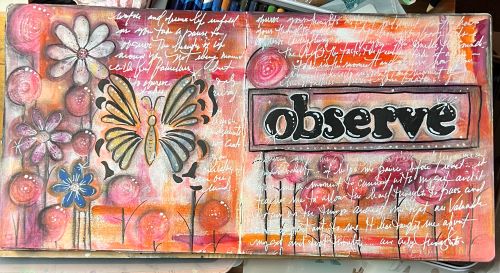
Stabilo Woodies
Stabilo Woodies are a fantastic addition to any art journaling toolkit, particularly for anyone who enjoys experimenting with different mediums and seeking vibrant, versatile coloring tools.
These chunky, wood-cased pencils are an ideal choice for art journaling, whether you’re a beginner or an experienced artist.
What makes Stabilo Woodies stand out is their versatility.
These pencils are perfect if you want to add a touch of playfulness and creativity to your art journal pages.
The wide, ergonomic design also allows for easy grip and control, making them suitable for all skill levels!
One of the key advantages of Stabilo Woodies is their water-solubility.
With just a brush and some water, these pencils transform into watercolors, enabling you to create beautiful gradients, washes, and blending effects in your art journal.
This versatility is great if you want to experiment with different techniques and textures. Whether you want to add a pop of color to your hand-lettered titles, create a dreamy watercolor background, or sketch intricate details, Stabilo Woodies can do it all.
Their vibrant pigments make your art journal pages come to life, and the ability to layer colors allows for endless creative possibilities.
If you are going to add these to your collection of art journaling supplies, make sure you get either a large pencil sharpener or the Stabillo 3-in-1 package that comes with one specially designed to sharpen them. They are some fatties so you will need that sharpener.
Inktense Pencils
Inktense Pencils are particularly well-suited for you if you enjoy adding intricate details and dynamic colors to your journal entries.
The versatility of these pencils allows for both fine lines and bold strokes, making them perfect for sketching, coloring, and even lettering.
When water is applied to the pencil marks, the colors come to life with an almost ink-like intensity, and once dry, they become permanent. They are also lightfast and professional quality.
This permanence ensures that your art journal pages will remain vibrant and fade-resistant over time.
So, if you’re an art journaling enthusiast with a penchant for brilliant, long-lasting colors and a desire to create eye-catching, detailed journal spreads, Inktense Pencils should be at the top of your supply list if these fall within your budget.
Stabillo All Aquarelle Pencil
I don’t know what they put in these pencils but they are nothing less than awe inspiring, fun and spectactular.
They are water activated pencils similar to the Inktense in the sense that you can use them as a colored pencil and when wet, you can swoosh them around with a paintbrush.
They add so much drama it is incredible. They can be used for outlining and so much more.
This is an example of the use of a Stabillo All Pencil. The flowers were outlined with the Stabillo All pencil and then I used a paintbrush to wet the marks and swoosh around the flowers. This adds depth and emotion to whatever objects they are outlining.

Art Journaling Markers
When it comes to art journaling, markers are versatile tools that can add depth, color, and character to your pages.
Whether you’re a seasoned artist or just starting your creative journaling journey, choosing the right markers can make a significant difference in your journal’s visual impact.
Each type of marker has its unique qualities, making it appealing to different artists based on your preference and style.
Watercolor Markers
Watercolor markers such as the Winsor & Newton Watercolor Markers, offer the versatility of traditional markers combined with the blending ability of watercolors.
They can create beautiful washes, gradients, and soft transitions, adding depth and vibrancy to your art journal pages.
You can use less water for more intense colors, and add more water for a lighter effect.
One of the primary advantages of watercolor markers is their blendability.
They allow for seamless transitions between colors, making them ideal for creating gradients, shading, and depth in your art journal.
With their ability to reactivate and blend when in contact with water, these markers provide endless creative possibilities if you’re looking to tell stories, capture memories, or simply express yourself through art journaling.
Alcohol-based Markers
Copics and Ohuhu are popular choices if you want smooth and vibrant colors, with excellent blending capabilities. (I like these for my gothic, messy pages.)
These markers are known for their consistent ink flow and are ideal for creating detailed illustrations and intricate designs.
Their quick-drying, alcohol-based ink prevents smudging and allows you to work on multiple layers without damaging your earlier work.
This feature is a game-changer if you want to incorporate various artistic elements like collages, stencils, or stamps into their journal spreads.
If you’re an art journaling enthusiast looking for professional-grade results, vivid colors, and the capacity to seamlessly integrate mixed media, alcohol-based markers like these should be (or eventually become) an essential part of your artistic toolkit.
Read more about alcohol based markers in my in depth article Using Alcohol Markers|A Complete Beginner’s Guide.
Brush Tip Markers
Brush tip markers, such as Sakura Koi Coloring Brush Pens or Pentel Fude Touch Sign Pens, provide the flexibility of a brushstroke, allowing for both thick and thin lines.
They are perfect for hand lettering, calligraphy, and adding expressive details to your journal entries.
I’m a huge fan of brush-tip markers for adding personal touches my art journaling adventures, especially when writing quotes.
What sets them apart is the remarkable flexibility of their tips, which allows me to seamlessly transition from fine, delicate lines to broad, bold strokes with a simple change in pressure.
This versatility makes them perfect for artists like me who want to add a range of details and dynamic flair to their journal pages.
One of the standout features of brush-tip markers is their capacity to bring calligraphy and hand lettering to life. I can create stunning, flowing letterforms and decorative elements that elevate the overall aesthetic of my journal.
Plus, they’re fantastic for incorporating artistic elements and embellishments, giving your pages a truly unique and personalized touch!
Some brush markers such as the Tombow Dual Brush Markers can be reactivated with water using a paintbrush and used to paint once the marker has been applied to the substrate. However, they can be pricey so take care of them and please, please, PLEASE do not use them on watercolor paper or you will shred the nibs.
Acrylic Paint Markers
Acrylic paint markers like Posca and Molotow offer opaque, permanent, and highly pigmented colors.
They work well on various surfaces, including paper, canvas, and even textured pages, adding a bold and tactile dimension to your art journal.
Acrylic paint markers have become an indispensable tool in my art journaling arsenal, and I can’t emphasize enough how they can transform your journaling experience.
Whether you’re creating striking backgrounds, adding expressive illustrations, or experimenting with mixed media techniques, acrylic paint markers can handle it all.
Paint pens are great for mark making, adding details, coloring, hiding mistakes, highlighting, shading, hand lettering, writing thoughts, and truly are a valuable self expression tool.
The permanent nature of acrylic paint marker ink ensures that your art journal pages will remain vibrant and intact over time, making them perfect if you want to create keepsake journals.
Acrylic paint markers can be used with a variety of substrates including all types of paper, wood, claybord, and canvases.
If you are able to only afford a couple of them then I recommend one black and one white.
Metallic and Glitter Markers
I’ve found that metallic and glitter markers are like magic wands for my art journaling endeavors, and they’re perfect for anyone who wants to infuse their journal pages with a touch of shimmer and glamour!
I am a sparkly kind of girl so anything metallic makes my heart happy.
One of the most enticing aspects of metallic and glitter markers is their ability to make elements on your journal pages truly shine.
They’re fantastic for accentuating details, adding highlights, or outlining extra special things on your page that you want to stand out.
Whether you want to create metallic lettering that glimmers like gold, draw stars that twinkle like the night sky, or add a subtle glint to your illustrations, these markers will do the trick.
They’re especially appealing to artists who want to create dreamy, otherworldly, or celebratory atmospheres in their journals.
Another use for metallic and glitter markers in art journaling is to create eye-catching borders, frames, and decorative elements! Sometimes we want to border things to show boundaries or to make our voice shine louder. All things metallic can make all things shine.
Chalk Markers
I have not ventured into the world of chalk markers so I cannot tell you how to use them for art journaling. I am including them, however, because experimentation is part of what makes art journaling so transformative.
Some of the standout features of chalk markers is their ability to create the appearance of chalk without the mess.
They provide a matte finish without the dust and smudging associated with traditional chalk.
The appear to have nostalgic charm of chalk art but with a cleaner and more permanent alternative.
I am thinking these could be used for drawing whimsical doodles, highlighting key elements, or writing expressive messages.
I have, however, seen hand lettering done in with chalk markers so this may or may not translate the same way into an art journal.
Their opaque, chalky finish stands out beautifully on dark surfaces, and seems to make eye-catching titles, headings, and decorative lettering that captures attention.
Have you tried chalk markers for art journaling? If so, leave a comment below. I would love to hear your creative ideas and others may glean from your experience as well.
Dual-ended Markers
Last but not least, we have dual-ended markers, such as the Tombow Dual Tip Brush Markers..
These give you both a fine tip and a brush tip to work with, providing versatility for detailed work and broad strokes.
These markers are great if you want multifunctional tools, with limited space.
Consider your preferred style, techniques, and the effect you want to achieve when selecting markers for your art journaling.
Each type offers its own unique benefits, so don’t hesitate to mix and match to create captivating and personalized journal entries.
One of the features of dual-ended markers is their ability to switch seamlessly between fine details and broad strokes.
This makes them perfect if you enjoy working on intricate illustrations and lettering but also want the flexibility to fill in larger areas with bold colors.
Whether I’m adding delicate flourishes to my journal entries or creating vibrant backgrounds, these markers offer precise control and coverage.
Another compelling reason to choose dual-ended markers is their blending capabilities.
With two tips at your disposal, you can effortlessly create gradients, shading, and depth in your art journal.
Understanding Art Journaling Paints
Now that you know what your journal is going to be and what pens, pencils, and markets you can use, let’s dive into art journaling paints.
Watercolor Painting
As a beginner watercolors can seem very intimidating. They do have a learning curve.
However, watercolors can add beautiful expressive marks, bright colors and backgrounds.
As far as art journaling supplies go, I don’t think I could ever do without watercolor paint. There are just some days you may not want to be messy doing mixed media. And there is just something so serene and beautiful about watching the paint flow in the water.
I encourage you to start with a small affordable set. Take the time to learn color theory.
I promise you that if I can do it, you can do it also. I have a huge story about that but that is for a completely different blog post.
There are 2 watercolor sets I recommend starting with as a beginner:
- Kuretake Gansai Tambi 36 Pan Set
- Winsor and Newton Cotman Watercolor Sketchers Pocket Set
At some point after you learn colors and have grown used to using watercolors, then graduate up to Daniel Smith, Rembrandt, or Schmenke. They are so expensive that it is going to give you anxiety just opening them up to start using them.
The 2 sets I recommend are about the better quality inexpensive paints. Kuretake set has lots of colors so you don’t feel so limited with colors.
It also encourages experimenting with mixing colors to see what you like.
Winsor and Newton is a high quality brand. All Winsor and Newton COTMAN paints are student grade rather than professional grade. However, the little travel set has most of the colors you need to begin learning about colors and mixing your own without breaking your bank.
Watercolors last for a very long time so while it seems expensive up front, and it is, you will not need to purchase any for a long time. I have had my Kuretake set for 3 years and have used it during therapy sessions with my clients. It is still full of paint.
Acrylic Painting
For anyone looking to infuse their art journal pages with vibrant colors, bold statements, and textured flair, acrylic paints are a must-have.
What captivates me most about acrylics is their ability to deliver brilliant, vivid colors that pop off the page.
They are the perfect medium for artists who want their journal pages to radiate bright and loud life and energy!
Acrylics are especially appealing to those who appreciate the richness and texture they can bring to art journaling.
These paints can be applied with brushes, palette knives, sponges, or even your fingers, giving you a wide range of techniques to experiment with.
The tactile nature of acrylics allows you to add depth, layering, and intriguing textures to your journal entries.
You can head to your local art supply store to easily snag some acrylics, but if your budget allows, try Liquitex Basics or Amsterdam. They are both excellent choices.
Breakdown of Paintbruses for Art Journaling
Now that you’ve chosen your paint, choosing the right brushes for art journaling can make a significant difference in your creative process, and it’s something I’ve learned through trial and error.
The “best” brush for you ultimately depends on your personal preferences, style, and the specific techniques you want to use throughout art journaling. It may surprise you but of all the art journaling supplies I use, acrylic brushes for my messy, self expression are some of the most inexpensive.
Watercolor brushes are a different story. They are pricey and it is super important to take care of them.
Watercolor brushes are never ever ever to be used for acrylic paints, oil paints, or any material such as gesso or any type of adhesive. As a rule of thumb, use them only for watercolors or water soluable inks.
Acrylic brushes generally are made of materials such as hog or synthetic materials.
There are large varieties of synthetic brushes for both acrylics and watercolors. It is not necessary to purchase genuine animal hair brushes as a beginner.
That is not to say that I do not have high quality and expensive acrylic brushes and tools because I do. However, I use my cheap brushes most of the time for my art journaling because I beat them up. Royal Langanickel has a set of 7 acrylic brushes that are cheap and have lasted me for about 2 years.
Given all of the wear and tear they get, that is a pretty good value. Other cheap brands I like are Bomeijia and Transon.
Remember that this is art journaling and we are not creating professional works of art. Use what gets the job done and feels wonderful for you. The exception to this is watercolor brushes because brushes and paper do matter.
Use a dedicated brush such as a hog bristle brush for gesso. Use synthetic taklon or nylon brushes for acrylics. Use synthetic brushes intended for watercolors ONLY for watercolors.
Round Brushes
Round brushes are versatile and a great starting point for beginners in art journaling.
Their pointed tip allows for both fine lines and broader strokes, making them a top choice for both outlining and adding details to your journal pages.
A size 4,6 and 8 watercolor brush does just about everything. If this is all you can afford, there really is not a whole lot you cannot do with these 3 sizes. Princeton Aqua Elite is a high quality yet economical watercolor brush that even professional artists use. I love them.
For acrylics an inexpensive synthetic round brush is sufficient.
Flat Brushes
Flat brushes have a squared-off tip, which makes them ideal for covering larger areas with even washes of color.
They’re great for creating backgrounds, adding base layers, or blocking in shapes in your art journal.
A 3/4″ flat “bright” nylon brush is perfect for applying matte mediums, gels. A flat hog brush is excellent for applyint gesso.
Filbert Brushes
Filbert brushes have a flat, oval-shaped tip that combines the best of both round and flat brushes.
They’re perfect for blending, softening edges, and creating smooth transitions in your journal entries.
Detail Brushes
Detail brushes, often known as liner brushes or spotter brushes, have ultra-fine tips designed for intricate work.
They’re excellent for adding fine lines, tiny accents, and delicate details to your journal pages.
If you think you’ll be adding small and intricate details throughout your art journaling journey, you may want to consider these detail brushes!
I use the liner brush from my Royal Langanickel set for creating lines and marks with india ink or other inks. I have also used them for acrylic inks.
Fan Brushes
Fan brushes have bristles shaped like a fan and are fantastic for creating textures, softening edges, and adding subtle effects like foliage or clouds to your journal according to some artists.
They’re a favorite among some art journalists who want to experiment with various textures and enjoy adding a touch of realism to their pages.
I, personally, have never used one in my life. I own one. I have never used it.
Have you ever used one? Please share in the comments because I honestly do not know what to do with mine other than maybe make some snow.
Angled Brushes
I’ve found that using angled brushes in my art journaling practice can be incredibly useful, especially when I want to add precision and versatility to my pages.
These brushes are best employed when I need to create sharp lines, fine details, or well-defined edges in my journal entries.
Mop Brushes
When you think of mop brushes, think of mopping the floor. The mop has to hold a lot of water to go across the floor.
Mop brushes do the same. These are generally watercolor brushes and are useful for creating soft effects and washes for backgrounds.
They shine when I want to create soft, blended backgrounds or achieve a dreamy, watercolor-like effect.
They look like a tiny mop, and can often be used as such (to soak up unwanted water, or ‘clean’ areas of your page).
You can also use mop brushes for scenery, hair, and texture.
The best brush for your art journaling needs ultimately depends on your artistic style and the techniques you want to explore.
If you’re just starting, it’s a good idea to have a variety of brushes in your toolkit to experiment with different effects.
As you gain experience, you’ll likely develop a preference for specific brush types that align with your artistic vision.
Additional Art Journaling Tools
We’ve now covered all the beginner basics for art journaling, but there are a few honorable mentions I want to include in this article for you.
In this section, we’ll look at six additional art journaling tools you should know about when embarking on your art journaling journey!
Stencils for Art Journaling
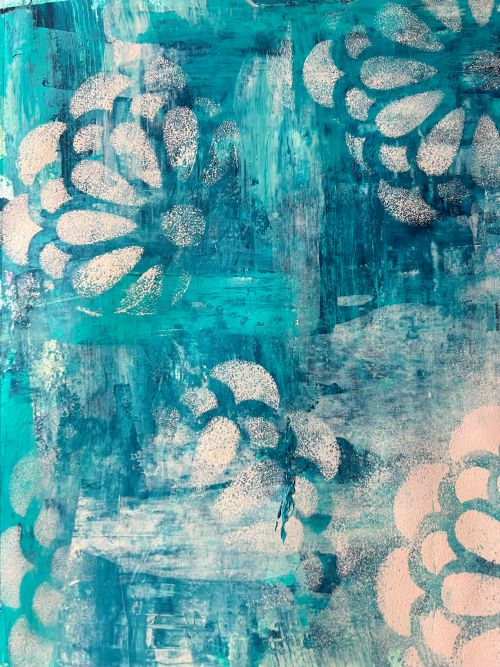
Stencils have become my trusty companions in the world of art journaling, and I can’t emphasize enough how beneficial they are, especially if you’re just stepping into this creative journey.
I love to use stencils for setting the background or adding intricate designs, consistent shapes, or captivating patterns to my art journaling pages.
They’re an absolute blessing for beginners because they provide structure and guidance, making it easier to dive into art journaling with confidence. They eliminate the daunting blank page syndrome by providing a starting point.
Stencils come in a wide variety of shapes, sizes, and themes, making it easy to find the perfect ones to suit your artistic vision.
Here is one of my favorite stencil packs for art journaling.
Additionally, creating your own stencils is a fun adventure in itself! You can cut out shapes, write words, or get creative and make your own stationery!
Collage materials for Art Journaling
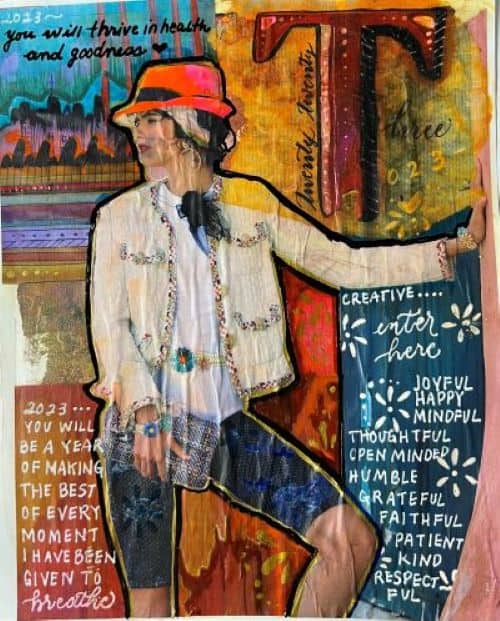
Collages are an integral part of my art journaling practice, and I’ve discovered that they are especially powerful when I want to capture and preserve memories.
For me, collages are a way to build memoirs within the pages of my art journal.
They allow me to piece together fragments of my experiences, memories, and sentiments in a visually compelling way.
Whether it’s a travel journal capturing the entire trip, a reflective piece on personal growth, or a simple snapshot of a memorable day, collages offer an artistic platform to encapsulate those moments in a tangible form.
They can help build connections between past and present, providing a visual map of my life’s journey.
Creating collages for your art journal can be an engaging and personal process.
You can source materials from various places, such as old photographs, postcards, ticket stubs, magazine clippings, old calendars, vintage photos, gelli plate prints, gelli plate transfers, or even your own artwork.
Read more about using magazines for collage in 5 Incredible Ways to Repurpose Old Magazines in an Art Journal.
To make them, I often use glue sticks (which we’ll look at next) or adhesive tape to attach these materials to my journal pages.
Additionally, digital collages have become increasingly popular, allowing artists to manipulate and combine images on a computer before printing and incorporating them into their journals.
Collages are a great way to use a wide array of mixed media and truly get creative with it!
Glues for Art Journaling
Glue is a fundamental tool in art journaling.
They are best used to securely attach different elements to your journal pages, whether it’s adding images, collages, ephemera, or even textured materials like fabric or lace.
The choice of glue can be crucial because different media require different adhesives for a secure and lasting bond.
For paper-based elements like images, magazine clippings, or printed text, I find that a good-quality glue stick like Uhu works wonders and does its job. On the other hand, Elmer’s Glue sticks work wonderful also.
Glue sticks provide a clean and even application, ensuring that the paper lies flat and doesn’t wrinkle.
When working with heavier materials or three-dimensional objects, gel medium is recommended because it is thicker.
Gel medium has a thicker consistency and therefore provides a strong bond, perfect for attaching items with a little bit of weight to them.
If you want to glue things like tissue paper or thin handmade paper, mod podge which doubles as a sealer. This means whatever is underneath the mod podge will not be affected. This is great for layering on top of water soluable art journaling supplies.
My absolute favorite adhesive is Liquitex Matte Medium. It is about the only adhesive that I use. It acts like an Elmer’s Glue but it is applied with a brush to the surface as well as the backs and over the tops of any material needing to be glued to the page.
Let’s not forget a good, old-fashioned glue gun, either. I would not use a glue gun to adhere paper to the pages. However, if junk journaling or wanting to add some 3D effects by gluing found objects such as buttons, a glue gun is helpful.
Another use for a glue gun is to squeeze some out on pieces of cardboard in different shapes and designs. Let dry and then you have some DIY stencils for Gelli Plate prints or making marks in paint.
Glue allows me to bring my creative visions to life, transforming a blank journal into a dynamic, textured, and visually captivating canvas of expression! Every art journalist needs their handy-dandy glue.
Scissors for Art Journaling
Scissors are a simple yet needed tool for my art journaling practice.
They come into play whenever I need to cut, trim, or shape various materials to fit my journal pages seamlessly. You know, to get the picture from mind to paper.
When it comes to selecting the best scissors for art journaling, you have to consider the type of materials you’ll be working with.
On the other hand, for heavier materials like fabric, canvas, or cardboard, a pair of heavy-duty scissors like this or fabric shears with serrated blades like this provides extra durability and strength to make clean cuts through the thicker media.
I tear most of my ephemera and collage papers with my hands. I do use scissors for cutting out people or other images from magazines. They are also useful for cutting thinks like twine, string, or trimming the outside of the pages when collage pieces hang over.
Gelli Plate
If you are wanting to add texture and interest to your art journal page, you can make your own prints using a Gelli Plate.
A Gelli Plate is a flexible, clear, flat, silicone surface that when paint is applied, can be utilized to make prints by laying a variety of different types of papers over it and then lifting up the paper off of the “plate.”
They are a lot of fun and there are endless possibilities as to what you can do with them. Using a Gelli Plate is a cost effective way to add to your collage and ephemera collection.
Makeup Sponges and sponge Brushes
Makeup sponges are useful for creating texture with paint. They can be used to apply paint for stenciling and can be purchased at any local grocery store, dollar store, or a pharmacy that sells cosmetics.
Alternatively, sponge brushes are round sponges attached to wooden handles and can be washed out and reused several times. They are also very cheap and are used for the same purposes as makeup sponges.
Washi Tape and Masking tape
Washi tape are small rolls of decorative tapes. If you have some laying around, the tape can be used to add interest and expression by adding small pieces to the page.
It is possible on some washi tape to write on it, depending upon the material.
Washi tapes can also be used to tape around all 4 sides of watercolor paper similar in appearance to a framed piece of paper. The washi tape can be slowly pulled off once the painting is dry.
Masking tape works the same way. However, it is best to use tape intended for sensitive surfaces so that the paper doesn’t tear when you remove the tape.
Baby Wipes and Shop Towels
Baby wipes are used to clean up messes you make on your page with paint.
They also can be used for moving paint around and also removing paint that has been applied. Baby wipes are also what are used to clean off a Gelli Plate. There is no brand better than the other. Just some cheap ones will do.
Damp shop towels or rags are great to have nearby for cleaning up messes as well as wiping off wet brushes after rinsing.
Brayer
A brayer is a rubber roller that is attached to a handle and looks like a mini paint roller you would use to paint your house.
These are what are use to apply the paint to a gelli plate. They come in different sizes and can also be used for applying paint to art journal pages.
Ink Pads
ink pads are awesome for stamping. You can use whatever you prefer but I recommend permanent ink.
Look for ink pads that say “permanent” “waterprooof” and/or “pigment” based because that means that they will not “move” when wet mediums interact with them.
Dye based inks are all water soluable no matter what medium you use. Ink pads come in tons of different colors. Ranger brand is my favorite although not all of them are archival so they are not all necessarily lightfast.
Rubber Stamps, Silicon Stamps, and DIY Stamps
Not everyone feels comfortable with drawing. Stamps are awesome because once applied to the page, you can just outline them and make them your own.
There are different types such as rubber and silicone. Either one works great however, if you choose silicon, you may want to also get an acrylic stamping block to make them easier to apply ink or paint and add enough pressure to see your images.
Art Journaling Embellishments
When it comes to selecting embellishments, your options are endless, and the choice often depends on the theme and media of your art journal.
For paper-based journals, stickers, die-cuts, or ephemera collections can be fantastic options. They allow you to easily add decorative elements, themes, or even sentiments to your pages.
For those working with fabric or textile journals, consider ribbons, buttons, or fabric scraps to create tactile and visually appealing accents!
Mixed media journalists can even explore metal charms, beads, or resin elements to add depth and uniqueness to your pages.
Embellishments can either be purchased from art supply stores, online marketplaces like this group, or even crafted by hand to personalize your journal even further. Thrift shops ,vintage stores, consignment shops, garage sales, old mail, old books or magazines, children’s books, are all suggestions for places you can go to get cheap embellishments.
You can use old calendars, greeting cards, stationary, junk mail,
When incorporating embellishments into your art journal, consider placement, balance, and how they contribute to the overall composition.
They can be used to highlight focal points, add borders, or create thematic clusters. The key is to use them thoughtfully to enhance the narrative and aesthetics of your journaling pages.
Embellishments are like the finishing touch on a masterpiece, adding that extra layer of charm and personality that truly makes your art journal uniquely yours.
The Importance of Gesso In Art Journaling
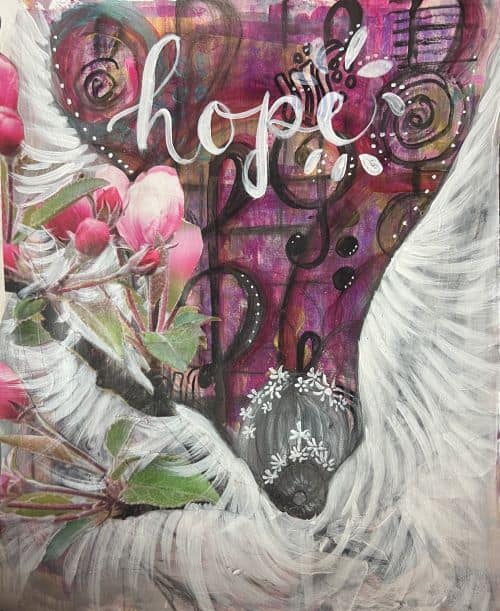
Gesso is a necessity for artists of all levels, as it not only ensures the longevity of your journal but offers an opportunity to explore different techniques and styles.
For different types of media, there are various gesso options to consider:
White Gesso: This is the standard and most versatile choice, perfect for creating a neutral surface on your pages. White gesso provides a clean canvas for your artistic expressions.
It is translucent so when applied over collage papers, some of the writing or markings will show through which is one of the wonderful parts about mixed media art.
It gives a subtle texture while allowing the paper to show through, adding depth and interest to your journal entries.
Clear Gesso: Clear gesso is excellent for artists who work with transparent or water-based media like watercolors. I, however, have used my bottle of clear gesso only twice and have had it for about 3 years.
Black Gesso: Black gesso is fantastic when you want to experiment with dark backgrounds or create dramatic contrasts. It’s perfect for mixed media artists who want to incorporate elements like metallic paints or colored pencils.
Grey gesson: Grey gesso has the same funcionality as all gesso except that it is grey.
Gesso acts as a protective barrier, preventing paints and inks from seeping through to the other side of your journal pages and minimizing paper warping due to moisture.
It also is what adds “tooth” to the substrate which is helpful when using colored pencils, graphite, charcoal and a variety of other art supplies.
It enhances adhesion, allowing you to securely attach various materials like collage elements or acrylic paints. Colors are brighter when applied over gesso as well.
Additionally, as mentioned in the “Journals” section of this article, gesso is needed to help create sturdy pages, unless you are using watercolor paper.
Pastels
There are 3 types of most commonly used pastels: oil, pan and soft.
Soft pastels are almost pure pigment and depending on the quality and the binders used to keep the pigment intact, they can be rather powdery and crumbly.
Crumbly does NOT equate to bad quality. Handmade soft pastels for example are very expensive and fragile.
Some are harder than others. I often use my Ohuhu Soft Pastels for mark making and for adding color.
Pan pastels are soft pastels usually in a round container. They are applied with an applicator and also add beautiful colors.
Oil pastels on the other hand, are waxy and contain oils.
Soft pastels are similar to charcoal in the sense that since they are powdery, you need to apply a fixative over the top of them to keep the pigment in place. You can layer over the soft pastels after the fixative dries.
Oil pastels like anything waxy must always be applied last. Once oil pastels have been laid down, no other art materials will be able to adhere to it. Also, do not use your brushes over oil pastels because they will get the oils on them and will get ruined, especially watercolor brushes.
Inks
There are several different kinds of inks to add to your art journaling supplies toolbox.
Distress Inks, Distress Oxides, and Sprays
Distress inks are water based sprays and pads that when activated with water give some super cool effects to create gorgeous backgrounds. These sprays are not permanent nor are they lightfast. Anytime water hits them they will reactivate.
They are super awesome and fun to play around with especially for stenciling.
Here is a very extensive video with demonstrations using Distress Sprays by Tim Holz.
India ink
India inks are pigmented inks that MOST of the time are permanent but are not lightfast. India ink can be used using dip pens, glass pens, wooden skewers or even liner brushes.
Because I prefer archival quality materials that are lightfast, I use Speedball Super Black India Ink.
Inks are great for adding lines for mark making, tree branches, lettering, or any time you want to add solid black to your page.
Here is a an example of a page using india ink and soft pastels:

Acrylic Inks

Acrylic inks differ from acrylic paint. Acrylic inks are runny and easy flowing.
Some ways that you can use them are for making drips, painting with brushes, making splashes of colors, or spraying with water and allowing them to spread whatever way you choose.
When they are wet, they act similar to watercolors. Watercolors and acrylic inks are different however because they are permanent once they have dried.
Some brands that I use are Liquitex and Daler Rowney which I used in the image above.
Get Started with Art Journaling and Unleashing Your Creativity
This article truly is the beginner’s guide to art journaling supplies. It is not an exhaustive list, either.
Be creative and use what you have. I cannot stress enough to use what you have and experiment with different art mediums and tools. DIY them to save money.
Trust me. I know how costly art materials can be and I truly have learned the hard way that for art journaling, it does not always matter about the tools you use. The important thing is to have fun and trust the process.
We’ve discussed how to choose the right journal for your art journaling desires, various pens, pencils, and markers to get creative with, which paints are best for art journaling, and additional resources to grow your art journaling tool kit.
When I was beginning my art journal journey, I wished I had a comprehensive list like this! Let my trials and errors of 4+ years serve your journey.
The very last tidbit I want to leave you with when embarking on your art journaling journey is where to look for inspiration!
You can draw inspiration from a multitude of sources, including nature, personal experiences, emotions, favorite quotes, books, movies, and even everyday life.
Stay present to explore your surroundings with a keen eye, and you’ll discover a neverending flow of ideas that can breathe life into your journal pages.
Additionally, connecting with the art journaling community through online platforms, such as social media or dedicated art journaling websites, can be a fantastic way to find inspiration and learn from fellow artists!
Remember, inspiration can strike from anywhere, so keep your mind open and your journal ready to capture those moments of creative revelation.
(Plus, bookmark this article so you can come back when you want to grow your art journaling supplies list!)
And when you begin to doubt your art journaling abilities, remember:
“I can do all this through Him who gives me strength!”
– Philippians 4:13 (NIV)
Happy art journaling!
Frequently Asked Questions About Art Journaling Supplies
Q: What are the essential art journaling supplies I need to get started as a beginner?
A: As a beginner in art journaling, you’ll want to start with the basics. You’ll need a dedicated art journal or sketchbook, a set of quality pens and pencils, an eraser, and some form of adhesive (like glue or glue sticks) for collaging.
These fundamental supplies will allow you to begin your art journaling journey and experiment with various techniques.
As you begin expressing yourself more, you will naturally want to start learning new things. Some other basics to use would be some stencils and some mark making tools like charcoal pencils or markers. i know one individual who does all of her journaling with crayons!
Use what you have. Everyday items can be turned into stencils and even old mail, calendars or greeting cards can be turned into collage.
Q: Can I use any type of paint for art journaling, or are there specific paints recommended for this practice?
A: I recommend using acrylic paint for mixed media. You can use any kind of acrylic paints such as craft paint from any dollar store, art supply store, or Walmart. Some brands that are popular are Folk Art, Apple Barrel, and CraftSmart. I prefer to use professional quality brands such as Golden because they are leave a nice sheen, very pigmented, and are lightfast. I also use other brands such as Pebeo, Amsterdam and Liquitex. I especially use Pebeo and Amsterdam brands for Gelli Plate prints that I use for collage in my art journal.
You can also use watercolors or gouache. However, because they are water soluable you are more limited as to how you use them. One way you can use them is to just use some watercolors on old papers, let dry, and cut out to use as collage on your last layer of your journal page. This can add some wonderful and expressive elements.
Q: Where can I find unique art journaling supplies and materials beyond the basics?
A: You can discover a wide range of unique art journaling supplies at specialized art supply stores, both physical and online.
Additionally, consider exploring craft stores, vintage shops, old record stores, thrift shops, and online marketplaces for one-of-a-kind materials like ephemera, specialty papers, and embellishments to add character to your journal pages.
Libraries sometimes get rid of old magazines and that is a great place to get them either for free or at a very low price. Magazines are phenomental not only for inspiration but for collage.
Q: Is it necessary to gesso my journal pages before starting, and what is the purpose of gesso in art journaling?
A: Gesso is not always necessary but can be beneficial.
Gesso serves as a primer that prepares your journal pages for various media.
It creates a stable surface, prevents bleeding or warping when using wet media, and allows paints and inks to adhere better.
Whether to use gesso or not depends on your preferred style and the specific media you plan to work with. I use white gesso for just about all of my mixed media art journaling pages. I also use it like white paint!
Q: Are there any guidelines for selecting the right art journal size, and how do I decide which size is best for my needs?
A: The choice of art journal size is a personal one and depends on your preferences.
Smaller journals are portable and great for quick sketches and on-the-go journaling, while larger ones offer more space for detailed artwork and extensive writing.
It may be less intimidating as a beginner to start out with an A5 size. Sometimes people get anxiety thinking that the whole page needs to be covered. If this is you, then start out smaller and work up to a larger size.
That is what I did. I have 3 different sizes I use: A5, 9×12, and 8×8.
My suggestion is to start with an A5. If you find that you are frustrated because your pages are not big enough, try an 8×8 becasue they are square and are really nice.
Please leave a comment below and lets talk everything art supplies. What is your favorite art supplies for art journaling? What makes it your favorite? Is there something you would like to try but are afraid of ? What questions do you have for me? I am here for you and am seriously looking forward to hearing from you.
Please also go follow me on Instagram @journalrefuge or @nancy_richardson_artist so we can connect personally!

